A thorough reflection on the textbook and the selection criteria

Textbook

The Collins English Dictionary defines a “textbook” as is a book used as a standard source of information on a particular subject. When responding to the query, “What is a textbook? In “Paradigm – a Journal of the Textbook Colloquium,” Hamilton makes the case that a textbook can be any book or book substitute, including hard-covered or paperback books, workbooks meant to be written in and used up, certain newspapers, news magazines, and manuals that a student must use as a text or text-substitute in a specific class or program as a primary source of study material intended to implement a major part of the curriculum. The definition of a school textbook is a contentious issue in the literature. Some people have questioned whether the books in the local library and school are reference books or textbooks.

ALSO READ: Summarise the precise goals of primary, secondary, and special education

The question of whether or not the novels that were studied in various classes are textbooks can also be raised. In response to these inquiries, Warren defined a text book as “a text books is printed instructional material in bound form, the contents of which are properly organized.” The explanation above leads us to the conclusion that curriculum makers’ decisions are reflected in textbooks.

ALSO CHECK: Affordable Editing and Proofreading Services

In educational institutions, textbooks have served as the subject matter experts, vital resources, and guidelines for the methods and processes that both teachers and students must adhere to. Textbooks are the most widely used educational resource because they are the most affordable and effective source of graded instruction and practical exercises. They are also a convenient source of material for study and discussion, and they can help inexperienced teachers manage their classes by saving them from having to deal with repeated exercises and dictated instructions.

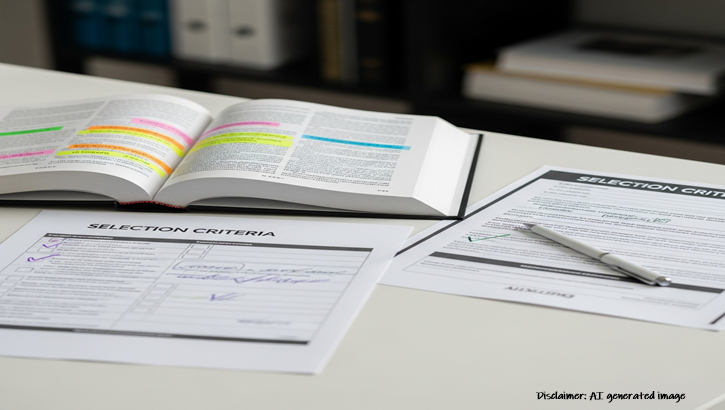
Selection Criteria for Books

a) Significance to an organized field of knowledge

The content in the subject matter should fall under the broad categories of knowledge in order to provide a more comprehensive foundation for understanding the world. There should be a core curriculum with specialized knowledge and broader areas of knowledge since the school curriculum should address both broad and specialized topics.
As a result, the curriculum should include a variety of carefully chosen ideas, concepts, and principles that form the fundamental basis of a subject.

b) Does the subject matter stand the test of survival?

The current state of knowledge must also be taken into account while choosing the topic. Only data that has been tried and tested and is applicable to the current circumstances should be chosen. According to Hilda Taba, the knowledge should be valid and significant to the extent that it reflects the contemporary scientific knowledge. Additionally, the information must be able to withstand the test of survival. These helpful facts ought to be found and incorporated into the curriculum.

c) Utility of the subject content

The content of the curriculum has often become the target of severe criticism by one and all in the society. It is mostly criticized for the heavy load of information which has no relevance to the pupils, for deadwood of information which has no utility, which is full of facts, dry and arid, the learning of which encourages rote memorization or cramming, without leaving any scope for intelligent reasoning.

ALSO READ: The featured articles published by PSM & Select the best journal for your submission: PSM Journals

d) Interest and ability

When choosing the topic, one should also take into account things like students’ interests, aptitudes, and abilities. There won’t be any learning at all unless the material is engaging for the students. Interest is based on the students’ aptitudes and ability to understand. Again, it depends on the students’ age and level of intelligence. Educational psychology’s ideas of learning and intelligence shed a lot of insight on what motivates students. Effective learning will come from choosing material that is appropriate for the students’ comprehension level.

e) Growth and development of a democratic society

This idea encompasses social growth as well and makes the assumption that the quickly occurring social change should be managed and steered in positive directions. To effectively address the issues related to social change, content that can develop knowledge and skills must be carefully chosen. This includes fostering social ideals in students and preventing the emergence of antisocial behavior that destabilizes and confuses society.

ALSO READ: The featured articles published by ABMRC & Select the best journal for your submission: ABMRC Journals

Review the Approval Textbooks review parameters

National review committee comprises on five or six members:

1. At least one expert form the syllabus Formulation Committee.

2. Two subject experts.

3. Two school teachers

Textbooks review parameters

1. The books truly reflect the curriculum.

2. It meets the objectives stated in the curriculum.

3. Book does not contain any material against Islamic and Pakistani ideology.

4. In case of approval, textbook is sent for publishing and distribution.

5. In case of objection, complaints are relayed with revision recommendations.

Follow: PSM | Scientific Publisher & Media Group

Summarise the precise goals of primary, secondary, and special education

The goals of primary education

1. To impart fundamental information about precise goals and cultivate the fundamental abilities, values, and attitudes the child needs to grow personally and to live in and contribute to a changing and demanding social environment.

2. To offer learning opportunities that help children become more conscious of and receptive to societal changes and fair expectations, as well as to equip them for positive and productive engagement.

3. To foster and deepen the child’s understanding of, sense of belonging to, and affection for the country and its citizens.

4. To encourage job experiences that enrich and develop the child’s inventiveness and work orientation in order to prepare him for honest and profitable labour.

    Particular goals of secondary education

    1. To cultivate the ability to study and live in order to:

    a. Improve your communication skills.

    b. Encourage the curiosity.

    c. Experience personal fulfilment as a result of learning and success.

    d. Foster an understanding of problem-solving techniques; and

    e. Assist individuals in cultivating their capacity to react to experiences in original, thoughtful, and creative ways.

    ALSO READ: A recent study by NASA explains different sides of the moon

    2. To cultivate values such as:

    a. becoming self-sufficient and developing a sense of accountability for individual and collective acts in ways that demonstrate concern and regard for others (e.g. respect for others).

    b. Recognise and respect people’s and groups’ rights to diversity, so long as their rights do not override those of others.

    c. assist students in gaining a sense of self-worth and personal identity;

    d. assist individuals in making important, fruitful, and fulfilling contributions to society by preparing them for adulthood and the workforce.

    3. To impart the information necessary to satisfy their needs and as a foundation for future education in order to:

    a. Develop an awareness of the elements of their living and non-living surroundings.

    b. Encourage individuals to recognise the impact that technology and the arts have had on people’s lives.

    c. Offer scientific and art activities that are suitable for the community.

    d. Help kids gain knowledge of their country’s history, culture, and way of life.

    e. Assist individuals in gaining an appreciation for people from different nations and cultures, as well as their interactions with them;

    f. Foster an awareness of human reliance on both natural and artificial settings, as well as responsible resource usage attitudes.

    Objective of special education

    1. To help the disabled create motivated habits that will lead to academic success.

    2. To help children with disabilities establish a realistic self-concept.

    3. To be as effective as possible in academic topics.

    4. To focus on academic subjects that strategically identify effective living or certain kid kinds with disabilities.

    5. To take into account the physical and mental hygiene of schoolchildren with disabilities.

    6. To instill in the disabled a desire to engage in activities that are open to those without disabilities.

            Read our blog: ISA Blog

            Piaget’s theory of cognitive development to accomplish the goals at the elementary school level

            Swiss developmental scientist Jean Piaget (1896–1980) developed Piaget’s theory of cognitive development, sometimes referred to as a developmental stage theory. It covers the nature of knowledge, how people create, acquire, and apply it, as well as the nature and evolution of human intellect. According to Piaget, cognitive development is the arrangement of mental processes brought about by environmental experiences and biological maturation. Children learn about the world around them, encounter differences between what they already know and what they learn from their surroundings, and then modify their thoughts accordingly. According to him, language depends on the knowledge and comprehension that are gained via cognitive growth, which is at the core of the human body.

            Piaget identified four critical phases of cognitive development: the sensorimotor stage, which lasts from birth to age two; the preoperational stage, which continues from age two to age seven; the concrete-operational stage, which lasts from age seven to twelve; and the formal-operational stage, which lasts from age eleven to twelve and beyond. Applications of Piaget’s ideas include “open education” and child-centered classrooms.

            Read: The role of textbooks in elementary-level education: Essential tool for the educational system

            Piaget’s stages of cognitive development

            There are four important stages of cognitive development:

            (i) Sensorimotor: (birth to about age 2)

            In the first stage of Piaget’s theory, newborns possess the following fundamental senses: hearing, vision, and motor abilities. Though restricted at this point, the child’s understanding of the world is always growing as a result of their interactions and experiences. When a newborn reaches the age of 7 to 9 months, Piaget claims, they start to exhibit object permanence, which means they can comprehend that things exist even when they are hidden from view. For instance, if a child’s favorite toy is hidden behind a blanket, they are still able to search below it even if they are unable to see it.

            (ii) Preoperational Stage: (begins about the time the child starts to talk about)

            In the first stage of Piaget’s theory, young children start employing mental symbols to analyze their surroundings throughout this developmental period. These symbols frequently consist of words and pictures, and when the kid encounters numerous things, occasions, and circumstances in their daily life, they will start to use these varied symbols. However, because children at this stage are unable to perform some cognitive processes, such as mental math, Piaget termed it the “preoperational” stage. Apart from symbolism, youngsters begin to play pretend, assuming the roles of instructors and superheroes, among others. Children between the ages of three and four frequently exhibit what is known as egocentrism, which is one of the deficits in this developmental period. Around the age of seven, however, children’s brain processes shift from being egocentric to being more intuitive; that is, they start to consider appearances rather than logic.

            Read: Fully Funded Scholarship at Asian Institute of Technology (AIT) 2025

            (iii) Concrete: (about first grade to early adolescence)

            Children between the ages of 7 and 11 employ suitable reasoning to create cognitive operations throughout this period, and they start applying this new way of thinking to many situations they may come into. In order to create a generalization, children in this stage use inductive reasoning, which entails extrapolating findings from other observations. In contrast to the preoperational stage, children may now rearrange and modify mental representations and symbols to create a coherent concept. Reversibility is an example of this, where a kid can undo an action simply by doing the opposite.

            (iv) Formal operations: (about early adolescence to mid/late adolescence)

            The capacity to “think more rationally and systematically about abstract concepts and hypothetical events” is the hallmark of the last stage of Piaget’s cognitive development. One advantage of this stage is that the kid or teenager starts to develop their personality and learns why people act in certain ways. Negative sides do exist, too, such as the kid or teenager acquiring egocentric notions, such as the personal story and the imagined audience. An imaginary audience is when an adolescent feels that the world is just as concerned and judgmental of anything the adolescent does as they are; an adolescent may feel as if they are “on stage” and everyone is a critique and they are the ones being critiqued. A personal fable is when the adolescent feels that he or she is a unique person and everything they do is unique.

            Read our blog: ISA Blog

            The role of textbooks in elementary-level education: Essential tool for the educational system

            Primary education, often known as universal education, is the most fundamental and foundational stage of the educational process. It is also the most sensitive and important. The basis of a man’s personality is laid by elementary school education. It creates a path for a child’s smooth development as they must get ready for the duties they will be required to fulfil throughout their lifetime as an engaged and valuable member of society.

            Fundamental skills like speaking, listening, reading, and writing are developed, study habits are shaped and become part of learning styles, and most importantly, the future trend and ting of learning is fostered at this stage. A child who has been carefully handled, properly motivated, and firmly educated at a base or an aerodrome can fly anywhere to chase his or her destination in life. As a result, it is crucial to give special and serious attention to elementary education.

            To maintain a strong foundation, the primary school curriculum must be reexamined, the budgetary constraints reevaluated, the educational objectives reviewed, and the policies finally put into effect on a war footing. This is how our country can set off on a path that will undoubtedly lead us to our desired goal of having 100% literacy in Pakistan, which seems like a long-term fix for all of our issues. The finest means of achieving this goal are political will, group intelligence, and a sense of commitment to this admirable objective.

            Role of textbooks in education

            The textbook offers knowledge and information, but it does so from an ideological perspective. Some examples are the relative importance of science and technology, historical perspective, and accepted language patterns.

            A selection of information regarding a certain topic and theme is presented, keeping in mind that learning should be progressive and organized, following subsequent years of study, and that the curriculum shouldn’t be overburdened.

            It helps the learner see and understand the world, integrate information from sources other than the curriculum, and master what he has studied.

            The learning path that the textbook suggests is organized into progressively larger blocks of instructional modules. It offers several choices for organizing learning.

            A textbook can be viewed as a working instrument for both the teacher and the student. The nature of the textbook as a communication tool will be determined by the language employed, the quantity and level of information, the text, and the relationships between the latter two aspects. In general, the least developed nations give priority to student textbooks. Teachers may choose to use a teacher’s handbook, which is different from school textbooks.

            ALSO READ: Key factors for perceptive comprehension of projective learning in contemporary pedagogy

            Additionally, the possibility of using some textbook components collectively, including diagrams, maps, and drawings, for instance, in a class, may be investigated; this reduces production costs.

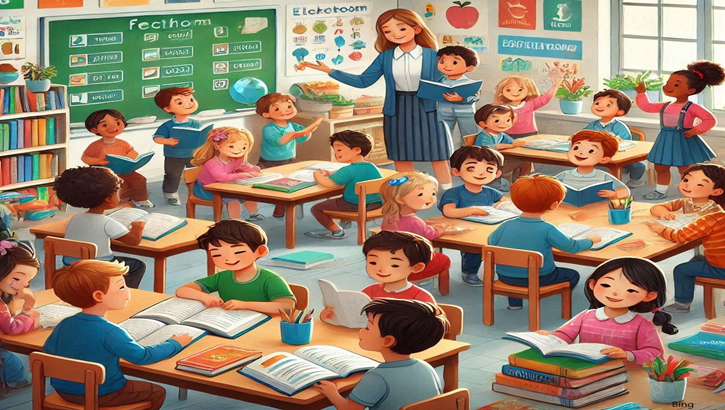
            Education does not occur in a vacuum. We have to guide our kids toward specific learning goals and make sure they are reached. Textbooks help students and teachers in this way. In the process of teaching and learning, they are crucial. They offer each kid the most learning opportunities possible in addition to providing the fundamental framework that a large portion of classroom activities occur inside.

            A few tools are needed to facilitate teaching and learning. The textbook is one of these resources, and it is the main topic of this page. A textbook is a book that provides a thorough overview of a subject to elucidate it.

            The educational system cannot function without textbooks. Regretfully, some claim that they are useless and have no bearing on education. This is untrue, though, because they serve a variety of purposes and offer advantages to both educators and learners.

            Advantages of using textbooks

            • Textbooks act as a reference for the required syllabus and curriculum. They guarantee that the subjects taught in various states and schools are comparable.
            • It imparts values, attitudes, abilities, and knowledge to both teachers and students.
            • It offers recommendations for instruction and learning. Thus, when teaching certain subjects, the instructor is aware of what is expected of them. They are also aware of the most effective way to aid kids in better assimilation.
            • Textbooks save time and energy when searching for information since it is a source of the material. They are an easily accessible reference point. It is a readily available source of information.
            • Using textbooks makes teaching various subjects systematic as it is arranged according to themes. For this reason, it is easier for students to follow the lessons and understand them better.
            • They play major roles for weak students to achieve good grades as they are able to read on their own in more detail.
            • It is a reliable point of reference. Because they are properly researched and therefore credible, while most information on the internet is added randomly.
            • Provides students with several examples, activities, and experiments related to the topics so they can understand better.
            • Textbooks serve as a lighthouse and a pathway since they offer comprehensive knowledge along with references in case teachers or students need more information. They are also illustrated to help students envision and understand subjects.

            Key factors for perceptive comprehension of projective learning in contemporary pedagogy

            The function of the teacher is unquestionably essential in contemporary pedagogy, where the teacher serves more as a coordinator, a personal mentor, and a facilitator of learning. Teachers should receive training on implementing open and individual-directed learning strategies emphasizing collaborative work, contemporary arrangements, and valuing each student’s uniqueness. There are many dos and don’ts on the list. But the actual situation necessitates more than just planning, amending, and upgrading the elements of elementary education. The following assertion is the main criteria for implementation: “Elementary education should be projective.”

            To have an insightful understanding of this projective learning in contemporary pedagogy, some factors are inevitable.

            1. The very first is involvement. In Pakistan, elementary education planning does not involve those who will be most directly affected by its activation: students, teachers, parents, and the community. Unfortunately, the premise that prevents this involvement is that education members and actors are not conversant with the vocabulary associated with educational policies or the trends in educational programs. However, the reality is that without the participation of the aforementioned strata, basic education cannot be implemented and maintained effectively. They must participate in the preliminary examination of students’ needs (social, financial, emotional, and physical), in the writing of the documents, and in the justification of efficient basic education.

            ALSO READ: Explain the significance and reach of basic education in Pakistan

            2. The second factor for ensuring the implementation of projective learning in contemporary pedagogy is commitment and dedication on the part of the teachers. Commitment can be interpreted as the tendency to adjust new roles (multirole) in the teachers instead of traditional designs. In this regard, teachers’ sufficient and moral support should be maintained by the higher authorities. A problem witnessed in many schools is that teachers’ behaviors are prone to returning to traditional patterns if sufficient attention from every perspective is not maintained. Teachers’ enthusiasm and energy will remain understandably high if they receive such attention.

            3. Thirdly, other important factors are budgeting/funding and resources. The observable phenomenon in elementary education is its failure due to the absence of substantial finances. This stage of education, according to the foundation, requires more energy and money to implement productively. For low-budget schools, the private school system could be the inspiration, which partially runs on funding from rich families. If the community has the chance of being involved in the planning process, it definitely is going to participate in the funding process.

            Furthermore, by doing this, it would be possible to guarantee the allocation of a large amount of resources, as the typical mistake during implementation is to rely solely on teacher-made materials, ignoring a budget for consumable materials and less current material acquisition. To doom primary education is to make no provisions in this area. The causes of primary school failure can be eliminated if these key components are properly managed.

            Read our blog: ISA Blog

            Explain the significance and reach of basic education in Pakistan

            The concept of primary education and its scope

            Education is considered to be a crucial prerequisite for growth. Education distinguishes developed nations from less developed ones. The 1990 Declaration on Education for All states that everyone, male and female, of all ages, wherever on the globe, has the fundamental right to an education. The most effective means of enhancing living conditions and ending poverty is education.

            Preschool to eighth grade is regarded as elementary education in Pakistan. The most crucial stage of the educational system, elementary school lays the groundwork for subsequent or future learning. This educational period has always been prioritised, and all conferences and policies pertaining to education have done so for this reason. In the Millennium Development Goals, it was intended to be finished in 2015; however, administrative shortcomings prevented it from being accomplished. In Pakistan, elementary education still needs a great deal of work to achieve the performance levels that are competitive worldwide. Therefore, re-formulation of objectives, policies, curriculum, infrastructure, teacher training, and implementation system is of paramount importance and need to be handled at the top most priority to pace with the world.

            Quality education in Pakistan has been the subject of considerable discussion and controversy. Paradoxically, they all focus more on the kinds, sources, and substance of education than on its phases, especially the most important and pivotal one, elementary school.

            Recent years have seen minimal advancement in the creation of new and current programs for elementary-level teenage learners in government schools. Government schools are cutting back on its physical education, health, counselling, and exploratory programs. Education has been reduced to instructing students in rote skills and imparting knowledge. The area of the learners’ personnel development has been undervalued by this content-centered basic education and simple imitation. Neglecting the numerous continuous, prolonged societal changes that emerging learners experience has been the norm, yet the failure of government primary education has been pushed to the side in favour of easier and less expensive solutions.

            These social changes are:

            • The traditional family structure of a father working and a mother staying at home is evolving.
            • Teenage suicide rates are rising as a result of many stresses.
            • Preteens and early teens are thought to spend one-third of their waking hours playing online games, watching television, and browsing social media.
            • The promotion of mobile brands, networks, and bundles accounts for 75% of all advertising. One major factor contributing to delinquency is the absence of a stable home.

            The elementary level is comprised of the students with the most impressionable age group, where various social changes make indelible prints on their minds. These years represent the last chance for the students to master basic skills, a lasting attitude towards learning, and the assertion of self and individualistic differences. Success at elementary school, or the future life, can be determined and predicted for this age group.

            Read: Describe the issues with the teacher training process considering the educational system in Pakistan

            Associations like the Pakistan Montessori Council, Pakistan Elementary Teachers Association, and the National Middle School Association hold regular conferences and workshops for teachers involved in basic education instruction in an effort to promote a balanced elementary curriculum. Nonetheless, a significant portion of the government’s money should be allocated to support groups and educational institutions. Additionally, government educators and administrative officials should ensure that the material is focused on cognitive learning.

            It must be diversified and exploratory based on real life situations and indigenous experiences. Consequently, it could enhance the development of problem solving skills and reflective thinking processes among the students. This would also help the students to acknowledge and appraise their own interests and talents. The areas of curriculum concerned with basic skills—logical, sequential, and analytical should be taught through an entertaining pedagogy. Other areas of curriculum like social, moral, emotional, and physical should be developed through an integrative approach towards prevalent social issues and factors.

            To put it briefly, primary school education and knowledge must reflect the local socioeconomic groups, culture, ethnicity, and ideology in order for children to relate to one another and solidify their knowledge while developing critical thinking skills. Additionally, this will enable the student to understand who he is and realise his ideas, obligations, identities, abstractions, and social attitude. Subjects should be coordinated and follow an inter-disciplinary trend rather than being departmentalised.

            Follow: ISA Blog

            Describe the issues with the teacher training process considering the educational system in Pakistan

            Challenges in Teacher Education

            Teacher training is a pressing problem in both developed and developing countries. Teachers are not assisted in preparing their pupils for the problems of the modern world by the kind of teacher education that is provided or the approaches that are employed. As a developing nation, Pakistan has also experienced serious issues with education since its founding. As a result, the educational system has not been able to prepare its citizens for the needs of a democratic society, which include dynamism, innovation, and open-mindedness in both thinking and conduct. This dire scenario is caused by a number of things. Some of the biggest obstacles to teacher education include a lack of funding for teacher education, inadequate pre-service and in-service training, a shortage of human and material resources, low pay and a low regard for teaching professionalism, and globalisation. These issues are being fervently brought up in academic and instructional conferences and seminars. Let’s talk about a few of the major concerns and challenges with teacher education.

            Allocation of Educational Funds

            Funding for education in Pakistan is extremely low compared to adjacent nations. Moreover, technical and teacher education are neglected in favour of higher education when government funding is distributed. The country has not advanced economically, politically, or socially as a result of the educational system.
            Because there was a lack of experience, awareness of legal requirements, and timely funding release, several sectors were unable to fully and efficiently employ the allocated money and were forced to return it to the government.

            Government Training Institutes

            In Pakistan, provinces are in charge of managing teacher preparation programs. Nonetheless, the federal curriculum wing is in charge of teacher education establishments. In general, Pakistan lacks resources and institutions for teacher training, especially for female instructors in some areas of Balochistan, Sindh, and KP.

            Limited Manpower and Material Resources

            We can all agree that the most important element of an educational system is its instructors. Their ability to teach is influenced by a variety of aspects, including their drive, credentials, training, aptitude, and experience, as well as the organisational culture and management systems. Unfortunately, Pakistan lacks both quantity and quality of these educators, which eventually has an impact on the country’s educational system as a whole. The teacher education system faces a shortage of material resources in addition to human resources.

            Read: The qualities of an instructor in the context of Islamic ideology

            Low Management Standards

            Pakistan’s education sector is likewise plagued by subpar administration, oversight, and control. The absence of a sufficient support/monitoring structure for instructors, a lack of appropriately prepared master trainers, and a lack of emphasis on teaching practice all lower the quality of teacher certification programs. Since there isn’t a recognised organisation that certifies instructors, applying for a teaching post is seen to need only the completion of an education degree or diploma. Supervisors have an extremely unusual function in teacher training institutions. Most of the time, supervisors fail to provide their trainee subordinates with the appropriate direction. This could be the result of overworked employees, inadequate resources, and lacklustre support from the relevant departments and organisations.

            Training of Government Teachers

            A teacher must have training in order to perform at a high level. Each teacher will get one in-service training session at least once every five years, according to the training institutes. Unfortunately, the percentage of inexperienced instructors we now have is negligible. Many educators who are nearing the end of their careers have never received any in-service training. The teacher education intuitions’ curricula are out of date and extremely conventional, making it impossible to improve instructors’ quality, motivation, or ability to teach.

            Lack of Potential and Competent Educators

            In Pakistan, it’s our bad luck that teaching is rated as the lowest among the jobs by the youth, because of lesser incentives, slow promotions, and lesser fringe benefits. Due to these factors, youth do not select the teaching profession with zeal, vigor, and ardor. The government teachers are not well groomed and equipped with knowledge and training. They join this profession by luck, not intentionally.

            Lack of Interpersonal and Counseling Skills

            The absence of interpersonal and counselling skills among instructors, which is detrimental to meeting students’ learning requirements, is one of the problems with teacher education. According to a study by Barrow et al. (2006), addressing students’ unique learning requirements, taking into account their cultural and socioeconomic background, and integrating families and the community in school activities are the key issues facing teacher education. Students’ intellectual, moral, spiritual, and social growth depend on these interpersonal and counselling abilities.

            Poor Evaluation and Assessment Criteria

            Evaluation and assessment criteria is limited to satisfactory, unsatisfactory, good, very good, or marks, percentages, grades, etc. standards. All the aspects of teaching skills are not being seriously and effectively evaluated. Modern techniques are neither supplied nor applied in the evaluation process. The duration of teaching practice is short and insufficient, and it is not up to the international standard. It creates a big hurdle to produce quality performance of teachers.

            Follow: ISA Blog

            The qualities of an instructor in the context of Islamic ideology

            The Quran is the central document of the Islamic faith. Islam is a comprehensive code of conduct that addresses practically every aspect of everyday existence and instructs its adherents on what to do and how to accomplish it in a certain circumstance. It is written in the Holy Quran,

            “Do not make the calling of the teacher among you as you are calling one of another.”

            The verse affirms the standing of instructors in society, i.e., that Islam has accorded them a respectable position. It also advises followers to treat their professors with decency and not to address them in the same manner as they address each other. The prophets of Allah were all mentors and educators for humanity in the Islamic world. The teaching and instruction of others is one of their duties, according to the Holy Quran. As it is written in the Holy Quran that prophets of Allah were the teachers, this statement indicates that the teachers have equal status to the status of the prophets.

            As prophets were being respected by their followers the teachers should also be paid an equal amount of respect.

            The Holy Prophet Muhammad (PBUH) said,

            “Seek knowledge and train to be dignified and calm while seeking knowledge, and humble yourselves with those whom you learn from”.

            This remark is essentially advising the kids to treat their teachers with decency and civility. When students are chatting with their professors, they must keep their gaze down and moderate the level of their voice.

            Teachers have a critical role in preparing the next generation of learners to work effectively. Muslim educators are doing a fantastic job educating the next generation of society’s youth. He is in charge of teaching the pupils about Islam in addition to the course material. Numerous Muslims work as teachers in several countries, specializing in different disciplines. There are non-Muslim nations where Muslims serve as educators. Many non-Muslim nations do not educate about Islam and do not even offer a course on it.

            Muslim teachers can show the importance of Islam through their behavior in non-Muslim countries. He must follow the teachings of Islam and make others follow as per their willingness.

            The Quranic Perspective on Teacher Education

            Islam mainly emphasizes character building so teachers’ training is also mainly based on different aspects of life. There are some responsibilities of teachers that necessarily be inculcated among their students.

            i. Forgiveness

            Allah (SWT) reminds us in the Holy Qur’an:

            It is He Who sent among the unlettered people a Messenger from among themselves, who recites to them His signs and purifies them and bestows them the knowledge of the Book and wisdom, although they had been necessarily in manifest error before that. (Sura: 62, Verse: 2).

            It is written in the Holy Quran that,

            “Show forgiveness, enjoin what is good, and turn away from the foolish (i.e., don’t punish them).”[Quran 7:199].

            It is a guidance for Muslims or believers to provide forgiveness to others. However, it has been noted that some educators penalize their pupils excessively when they make mistakes or act incorrectly. It should be their highest responsibility to pardon their pupils for any errors that they may have made.

            At another place in the Holy Quran it is said:

            “And verily, whosoever shows patience and forgives that would truly be from the things recommended by Allah”. (Qur’an, 42:43).

            It implies that if we have patience and forgive people, they will be able to act in the way that Almighty Allah has demanded. This implies that instructors must be patient with their pupils and be willing to forgive them if they make any mistakes. If a student’s behavior is below par, they should not use physical punishment.
            Students may learn to forgive others via their teachers. It occurs in class that students argue with one another over trivial matters, cease interacting, and act haughty. Now that this is the Sunnah of our Prophet (SAW), the teacher can help them to forgive one another.

            ii. Good Conduct

            Akhlaq is an Arabic term referring to the practice of virtue, morality, and good manners in Islamic Theology and Philosophy (Falsafah). It is most commonly translated in English as; Islamic behavior, disposition, good conduct, nature, temper, ethics, morals, or character (of a person).
            Akhlaq is the plural of the word Khulq which means disposition. “Disposition” is the faculty (Malakah) of the soul (Nafs) which is the source of all those activities that man performs spontaneously without thinking about them. Malakah is a property of the soul that comes into existence through exercise and repetitive practice and is not easily destroyed. A particular disposition (Malakah) may appear in human beings because of one of the following reasons:

            1. Natural and physical makeup (Fitrah):
              It is observed that some people are patient while others are touchy and nervous. Some are easily disturbed and saddened while others show greater resistance and resilience.
            2. Habit (Ada):
              It is formed because of the continual repetition of certain acts and leads to the emergence of a certain disposition.
            3. Practice and conscious effort:
              Which if continued long enough will eventually lead to the formation of a disposition.

            “Blessed is He in whose hands are the Kingdom – who is powerful over everything – who has created death and life, so that He might test you as to which among you is good in conduct.”
            (Al-Mulk 67: 1-2)

            The Holy Quranic verse mentioned above tells us that being virtuous is the only way to receive the favors and blessings of Almighty Allah. Because educators serve as role models for their children, this stanza instills in them the need to maintain proper behavior on school grounds. Pupils attempt to imitate their educators. It is unrealistic to expect a country to advance or thrive in the world if its professors behave badly. To illustrate: Instructors need to impart to their pupils polite social behavior. Teachers must help students who behave properly if they talk badly to other people or show disrespect for seniors and younger people. Teachers need to instill in their students the idea that this is essentially what defines our personalities—our akhlaq. A teacher must foster the whole development of each student’s personality.

            Read: The relevance and scope of teacher education in Pakistan

            iii. Humble Behaviour

            Humbleness is the opposite of arrogance and is an attitude and behavior that Allah and His Messenger (Peace and blessings be upon him) have commanded us to have. It is also a great tool used to spread Islam to others.

            The best way to achieve humbleness in the heart is contained in the Sunnah of the Messenger of Allah (Peace and blessings be upon him), who prescribed many methods to teach his companions how to be humble. We ask Allah to help us all become humble and stay firm on that path.

            “The true servants of the Most Merciful are those who behave gently and with humility on earth, and whenever the foolish quarrel with them, that reply with (words of) peace.”
            (Al-Furqan)

            The above verse of the Holy Quran gives us the message of mercifulness and advises us that we should not treat foolishness in the same way as they treat us. This means that your students sometimes behave in such a way that is not required then teachers need to teach them humbly. It has been found by research scholars that if we treat students humbly, then our response will bring change in their behavior.

            iv. Justice

            Justice in the context of Islam refers to putting things in their proper places. It also entails treating everyone equally. Similar to the Western tradition, fairness is seen in Islam as a moral virtue and a characteristic of human nature. Although they are not the same, justice and equality are similar in that they establish a condition of balance in the allocation of rights and obligations. According to the Quran, the holy book of Islam, fairness is the highest virtue. It is a fundamental goal of Islam to the extent that it comes after the conviction that Muhammad is truly a prophet and that God has the exclusive right to be worshipped (Tawheed).

            God declares in the Quran:

            “God commands justice and fair dealing…” [Quran, 16:90]

            In this verse, Allah directly commands Muslims to be just and deal fairly – as believers, we must consistently be aware that these values are an integral part of our faith.

            Teachers must do justice at the time of doing student evaluation. They must not show a biased attitude. Commonly, some students get affected due to the favoritism of teachers.

            v. Patience

            Patience (sabr) is a comprehensive virtue in Islam that encompasses perseverance, endurance, forbearance, diligence, and restraint. It is a characteristic of enlightenment in the heart of Muslims.

            وَاصْبِرُوا إِنَّ اللهََّ مَعَ الصَّابِرِینَ .  . 

            …and be patient. Indeed, Allah is with the patient.” (Al-Anfal 8:46)

            Muslims are urged to exercise patience in this verse of the Holy Quran because Allah would support those who do so during good times and bad. Teachers in the modern day must adopt this mindset in their students when they arrive for class. They must remember that their kids are still children, and as they are not adults, they should not be held responsible for their mistakes. Instead, they should be kind and patient with their students when they make mistakes.

             وَاسْتَعِینُوا بِالصَّبْرِ وَالصَّلاَةِ

            “And seek assistance through patience and prayer…” (Al-Baqarah 2:45)

            This verse from the Holy Quran reminds us to be patient, and it advises believers to ask for help via prayer and patience. It implies that educators who encounter any type of challenge in their day-to-day work should turn to prayer. Rather than taking matters into their own hands, teachers ought to pray for the pupils who are misbehaving in their courses.

            vi. Doing Good Deeds and Counselling One Another about the Truth

            “By time, indeed, mankind is in loss, Except for those who have believed and done righteous deeds and advised each other to truth and advised each other to patience.” …….(Al-Asr 103:1-3)

            The Holy Quranic verse mentioned above imparts two lessons to us: patience and honesty. This implies that since lying is wrong in the sight of the Almighty Allah, we must live truthful lives and refrain from lying. According to the aforementioned scripture, people who commit wrongdoing in this life will lose everything because Allah Ta’ala will judge them according to their actions.

            “Only those who are patient shall receive their reward in full, without reckoning.” (39:10)

            This verse from the Holy Quran tells us that individuals who practice patience in their lives will receive a recompense. This implies that if students’ answers fall short of what is expected, teachers should still be courteous to them, exercise patience, and let God handle justice. If this is done, they will undoubtedly receive an endless reward, as Allah has promised to all of humanity.

            “O you, who has believed, fears Allah and speaks words of appropriate justice.” (Al-ahzab 33: 80)

            This verse from the Holy Quran tells believers that they should always be afraid of Allah in all aspects of their lives. They ought to uphold justice in their own lives and refrain from allowing injustice to proliferate in society. When we act justly towards others, we demonstrate our fear of Allah. It is the wisdom of those who fear Allah. It implies that educators must exercise caution when performing any task during assigned time. If they fail to uphold justice in the classroom, it would be evident that they lack fear of Allah Ta’ala.

            vii. Fear of Allah

            One of the divine principles that Islam teaches people is to love Allah but to fear him as well. The believer should be connected to His Lord, whose bounties, grace, and generosity are endless, with great love and respect; he should think that His compassion and mercy surround everything, and he should not give up hope of being forgiven no matter what his sins are.

            “O you, who has believed, fear Allah and be with those who are true.” (Al–Taubah 9:119)

            This verse of the Holy Quran is having something more for the believers and it advised that they need to give support to those who are true. This means that we need to be on the side of a righteous people, we should favor those who are doing wrong then surely we will get blessings of Allah.

            Muslim teachers can deal with all types of situations of students, which are related to their course contents as well as their routine life, and effectively guide them. Through this guidance, the students could solve their problems of studies as well as the problems of routine life. Due to the many qualities of a Muslim teacher his demand and fame are increasing with time.

            Educators must understand that they are assigned a set of curricula to follow in the classroom. Muslims believe that we shall be held responsible for all of our deeds. Therefore, we shall be held accountable for all of our professional actions as teachers. We should be afraid of Allah because of this. We should firmly trust that Allah will punish us for any wrongdoing on our part. Following such an extensive discourse, it is determined that Muslims are expected to adhere to certain mandated principles. Educators who uphold these principles in their work will succeed both now and in the future.

            Follow: ISA Blog

            The relevance and scope of teacher education in Pakistan

            The brightest mind is required in a teacher to give students the proper advice. Teachers must continue to learn for this reason through a variety of courses called teacher education programs. To further the education of the public, numerous projects have been launched.

            The essence of teacher education

            National Council for Teacher Education is an educational program that is specially designed for those individuals who are willing to teach pre-primary to higher education levels.

            The Goods Dictionary of Education defines Teacher Education as
            “all the formal and non-formal activities and experiences that help to qualify a person to assume responsibilities of a member of the educational profession or to discharge his responsibilities more effectively.”
            W.H. Kilpatrick stated Teacher Education as
            “Training is given to animals and circus performers, while education is to human beings.”

            The idea behind teacher education

            A combination of professional skills, pedagogical theory, and teaching abilities makes up teacher education.

            The topic of teaching skills will encompass all the techniques used to impart knowledge, including how to organize lessons, carry out efficient assessments, give feedback, and arrange instruction using a range of techniques, approaches, and tactics. Teaching skills are not just for educators; any manager or supervisor who wishes to improve as a communicator and leader should also learn them.

            The philosophical, social, and psychological factors that educators must take into account to establish a solid basis for their instructional strategies in the classroom are included in the pedagogical theory. The four fundamental levels of theory are determined by the demands and specifications unique to each level.

            Read: The significance, range, and types of school records

            The first stage is the theoretical stage, which involves a deep consideration of the pedagogical issues, and its goal is to determine what needs to be taught. The second stage is the practical stage, which involves the development of pedagogical ideas and materials, and its goal is to help teachers apply their ideas in their classrooms. The third stage is the reflective stage, which involves a critical evaluation of the effectiveness of their teaching, and its goal is to learn how to improve the quality of teaching.

            Teaching Professional Skills include techniques, strategies, and approaches that are designed to work with people in a way that helps them to grow in the profession. A student would benefit from taking this class. It combines many skills that a young person needs, including soft skills, counseling skills, interpersonal skills, computer skills, information retrieval and management skills, and learning to live a life.

            The need for teacher education

            Teacher education is needed in the education field for the following reasons:
            • Teacher education is required to accomplish the teaching goals for better education of the nation.
            • In the teaching environment, all the students should be taught equally so that the ultimate teaching goal can be accomplished which is provided by the teacher’s education.
            • It is required to incorporate a good teaching vision among amateur teachers.

            Scope of teacher education

            There are various scopes of education in the teaching profession which are as follows:
            • Through teacher education, the students of the teaching profession can learn certain skills to teach pre-primary, primary, elementary, and higher secondary levels. Thus, teacher education becomes a different course to be analyzed properly by amateur teachers.
            • Through teacher education, the courses can be separated and diversified according to the levels of the student education.
            • Teacher education can be related to various subjects such as humanities, art, science, philosophy, sociology, etc.
            • Teacher education paves the way for the analytical study of child psychology to be associated with the learning in the classroom with which teachers can develop a deep understanding of the behavior.
            • Teacher education can lay the foundation for sociological aspects related to a child’s relationship with the environment and society which be studied closely by the teachers.

            Follow: ISA Blog

            The significance, range, and types of school records

            The Significance of School Records

            Any institution that is permanently organized should keep specific records that can be used to determine and assess the institution’s history, evolution, current state of affairs, goals, aspirations, and accomplishments, as well as its effectiveness and utility. This also applies to schools, which are long-term public establishments. For this institution to operate effectively, it must answer to multiple bodies. First and foremost, parents are in charge of providing their children with the right teaching and training. Even in situations where schooling is free, parents nevertheless indirectly fund their children’s education through rates, tuition, and general taxes. Some of them make significant sacrifices in order to pay the fees. In any case, they lose the ability to receive their kids’ help at home or to support themselves financially. The school must account to society, of which it is an organized institution, for how it fulfills its duty to prepare the next generation of students.

            The central government, or local government, whichever is in charge of maintaining the school or sharing the costs thereof, must be satisfied that the grants or maintenance costs paid for with public funds are being used for the intended purposes and that the school is offering productive working conditions. Finally, the administration and staff owe it to the students to get to know them personally, to monitor their academic progress with care and method, to determine and evaluate their overall accomplishments and capacities, and to appropriately shape their conduct and overall behavior.

            Maintaining comprehensive and organized records is essential for the school to gather and provide sufficient information to all those involved or interested in its smooth operation, as well as to make the best use of the information thus gathered for the advancement of its own goals and objectives. By directing students’ careers and improving the fit between them and their jobs based on these records, democratic education’s real goals are fulfilled. Parents’ cooperation in the school’s endeavor is mobilized with the aid of these records, which are used to provide reports to parents on the accomplishments, flaws, and progress of their children.

            Read: Various types of learning resources and tips for improving the quality of teaching materials

            Moreover, these records are required to provide the state or local education authorities with information and data, known as “returns,” that determine the current state of the school, the educational needs and progress of specific communities, and even the state at large. These records also serve as a basis for determining future development and expansion plans.

            The scope of academic records

            These documents must be comprehensive and detailed in their entirety if they are to have any true worth. They should also be kept up so that there is as little administrative labor required. If nothing else, they shouldn’t take up too much of the headmaster’s time, as that will make it harder for him to do his other responsibilities, which include organizing and supervising school events and teaching classes. Testing the integrity of individuals responsible for maintaining school records is another crucial prerequisite. Promptness in entering records is crucial for accuracy; in fact, it’s the most useful component of school supplies. Records should be kept secure and on hand at all times, inside the school, and kept out of sight. Under no circumstances should they be expelled from the school. Due to the fact that this rule has not been followed in practice, certain educational authorities have felt compelled to issue a directive stating that records, including visitor’s hooks, should not be removed from school grounds for security reasons by inspecting officers as well as teachers.

            It was discovered through an examination of the records kept in representative high schools across the nation that they were created with five goals in mind. These are the following:
            (1) To support advising, including student placement and categorization.
            (2) To enhance in-class instruction by providing teachers with data on the unique characteristics of their students.
            (3) To support research in education.
            (4) To satisfy the demands of 19 state and municipal authorities and serve as the foundation for reports.
            (5) To inspire students’ efforts. Records that fulfill the first two of these aims are seen as having the most significance in relation to the work that is done in the school.

            Records to be maintained

            Administratively, secondary schools keep records that fall under the following general categories: general, financial, educational, and equipment-related. The following list of records that a secondary school must keep may seem overwhelming, and in many cases, none of these records may even be required. Adoption of any record is contingent upon its potential to improve the effectiveness of the school’s management. One of the administration’s hallmark weaknesses is their obsession with keeping detailed records of every school action, even though they don’t justify the time and effort invested in them. Such records are kept for no purpose at all. If the school office is to become a repository for information that is not very useful for improving the effectiveness of the work being done in the classroom or assisting educational authorities in the planning of educational reform and development, a careful distinction between what is truly indispensable and what is truly disposable must be made. But, while choosing which records to keep in school, the inspecting officers’ approval is required.

            A. General

            1. Calendar

            2. Log Book

            3. Visitor’s Book

            4. Service Registers

            5. Register of Loans of Buildings

            6. Orders and Circulars of the Educational Authority

            7. Staff Leave Register

            8. Memo Book

            9. “From” and “to” Registers

            10. Local Delivery Book

            Read: Fellowships for Independent Research in Plant Sciences, Zoology, and Biology at the University of Oxford, UK

            B. Financial

            1. Acquaintance Roll

            2. Contingent Order Book

            3. Contingency Register

            4. Registration of Fee Collections

            5. Abstract: Register of Fees

            6. Register of Receipt & Expenditure (Games)

            7. Register of Receipts and Expenditure (Union)

            8. Bill Register

            9. Register of Donations (for private schools only)

            10. Register of Scholarships

            11. Practical Arts Section Bill Book

            12. Practical Arts Section Order Book

            C. Educational

            1. Pupils’ Attendance Register

            2. Teachers’ Attendance Book

            3. Class Time-Tables

            4. Teachers’ Time-Tables

            5. General Time-Tables

            6. Teacher’s Monthly Programme of Work

            7. Pupils’ Progress Record

            8. School Test Records

            9. Headmaster’s Supervision Register

            10. Admission Register

            11. Transfer Certificate Book

            12. Public Examination Records

            D. Equipment

            1. Stock Book of Furniture and School Appliances

            2. Library Catalogue

            3. Accession Register

            4. Library Issue Book

            5. Stationary Issue Book

            6. Stock and Issue of Games Materials

            7. Register of Newspapers and Magazines Received

            8. Register of Supply Slates and Books, etc., Received and Distributed

            9. Register of Articles Manufactured in the Practical Arts Section

            10. Register of Stock of Raw materials for the Practical Arts Section

            E. Correspondence

            1. From and “To” Registers

            2. Peon Book

            3. Manual Book

            4. File of Departmental orders and Circulars

            5. Public Examination File

            6. Register of Causal Leave Granted

            Follow: ISA Blog